
The Shift from Backyard to Homestead
The beginning of our homestead journey started when we lived smack dab in the middle of town with a pretty big fenced in back yard. We decided to get some chickens and start a raised bed garden. The garden didn’t grow anything, but we had 3 great little bantam chickens. A few months later we decided that while having 3 chickens was great, that we really needed to get out of town and start our little farm. So we moved to 3 acres in northern Wisconsin and now we’re raising chickens on acreage. We quickly transitioned from our 3 chickens to about 15 chickens, 15 chickens became 30 chickens, now we have about 40 chickens (and a small herd of goats) oh and as for gardens, we now have a lot of those, they’re actually very successful and we just built a 1500 square foot high tunnel for even more growth. Picking up 3 small chicks is definitely the gateway to the road of sustainability.
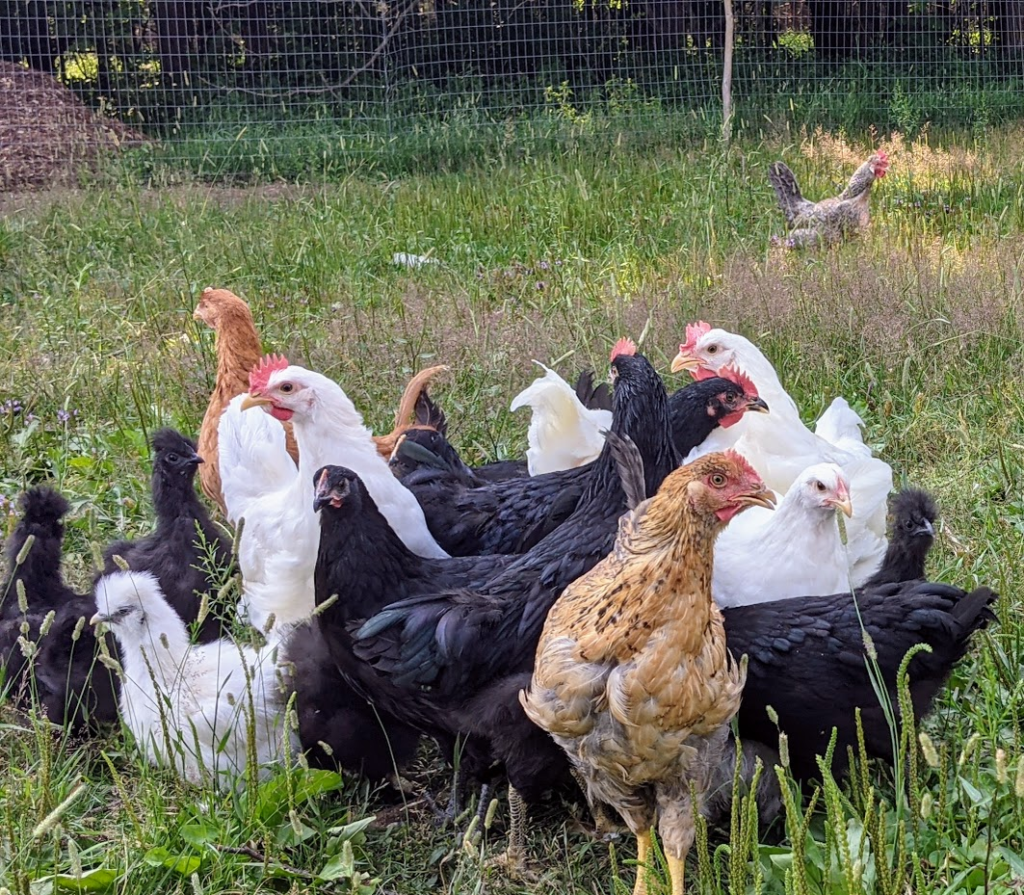
What size buildings to use for your chickens
When we had 3 chickens we did everything we could to make the biggest coop possible for them, but the city had limits on how big the coop and run could be. We cheated the system and raised the coop so the run could go under it so they would have a little more space than they were allowed.
When our chicken numbers were getting out of hand we had a custom built 8×8 shed delivered to our house. We love to DIY a ton, but I was so pregnant, which isn’t a shocker, we’ve been here 6 years and I’ve been pregnant almost half of that time. We were having an April baby and needed to get a bigger solution for our birds before she came, so buying a shed was the way to go. That shed might just be the nicest building on our property, unfortunately, half of the chickens prefer to sleep in the barn with our goats.
If you look up how much room chickens should have in a coop, you’ll see 3-4 square feet per chicken in a coop. That would mean I could have a maximum of 16 chickens in my $3000 coop. That chicken math is not mathing. So on good day when everyone goes home we have about 40 in there, making it a little less than 2 square feet per bird and they’re comfy. We have a lot of roosting bars to make up for it.
The Chicken Math Reality Check:
- The Rule: 3-4 sq. ft. per bird.
- The Reality: On our homestead, 40 birds live comfortably in our 64 sq. ft. shed.
- The Secret: Vertical space! Use old wooden ladders as extra roosting bars. Our Silkies absolutely love them.
Winter in the Northwoods: What Actually Works?
Automated doors make your life much easier, but they don’t always work if you live in a really cold climate. Our omlet door often gets clogged with frozen dirt. If you don’t live in a place where winter lasts 8 months, you would probably love an automatic chicken door.
In winter we use a heated waterer from Premier 1 ( I love that you can shop Premier 1 products on Amazon now, they’re a fantastic family owned company that we use for a lot of our heat lamps, portable fencing, and miscellaneous chicken products). We like to feed our chickens with a no-waste gravity fed feeder for a more automated chicken coop.
Feeding the flock without breaking the bank
If you have a big flock it’s time to ditch the big box stores for feed. Find a local feed mill and buy your feed in bulk. Shop around and see if you can find a place that will give you deals the more that you buy and stock up. We actually found an old 5 compartment feed bin on marketplace so we can keep all of our animal feed in one place. Proper storage is essential for keeping the food safe and free of mold.
The Barn Cat “Fleet”: Nature’s Pest Control
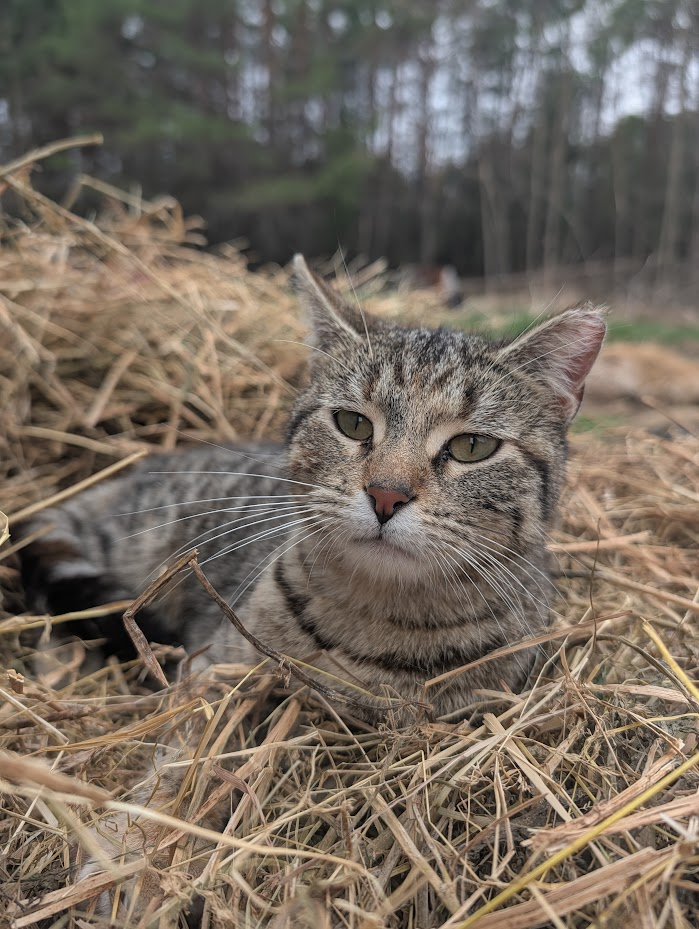
Need to protect your feed from mice? That’s when you contact the humane society to get a fleet of cats. Most humane societies have cats that can’t be indoor cats that need a job to do, and most of the time these are free. You’ll be helping your humane society out and you’ll have some cute barn companions. Our farm wouldn’t be a farm without a cat getting under your feet at some point while doing chores.
We let our chickens free range and the quality of the eggs is so much better than if they were in an enclosed run all day, plus they help with the tick population.
Cleaning your chicken coop will turn into compost for your garden. We use straw in the coop for composting, it breaks down better than shavings. Bonus if you have a small wood chipper and can chop the straw for their bedding, that will make compost gold.
Can chickens be profitable?
Honestly, even charging $4 dozen for eggs isn’t really that profitable. If you think about the start up costs of the coop and other things you need, plus you factor in how much your feeding the chickens. If your egg profit can cover feed you’re doing good.
Eggs really draw people to our School Yard Acres farm stand in summer. If you’re selling more than eggs the eggs can be a really big draw for people to buy other things like our famous cookies or a loaf of bread. In winter I have a couple customers that text us for eggs, but often in winter our chickens go on an egg strike and we get really close to having to buy eggs from the store (but we haven’t! We’ve made it on just our chicken eggs for 6 years, that’s saying a lot since we bake a ton.)
Troubleshooting Common Issues with large flock management
roubleshooting: Large Flock Health & Security
When you jump from three chickens to forty, the stakes for health and safety get much higher. A small issue can sweep through a large flock quickly, so being proactive is the name of the game.
Dealing with Mites and Pests
Keeping 40 chickens healthy in one coop is a challenge. We have dealt with mites in the past, and my secret weapon is Diatomaceous Earth (DE).
- The Routine: Every time I clean out the coop, I sprinkle food-grade DE liberally on the floor and in the nesting boxes before adding fresh straw.
- The Dust Bath: I also make sure the girls have a dedicated “dust bath” area. If they can’t find a dry spot on the acreage, I’ll fill a shallow bin with a mix of dirt, wood ash, and DE. It’s like a spa day that doubles as a parasite treatment.
The Rooster Debate: Protection vs. Peace
Should you keep roosters? On three acres, my answer is a resounding yes. We usually keep one or two roosters in our flock.
The Warning System: They are the ultimate security cameras. Our boys once alerted the entire farm to a hawk circling overhead.
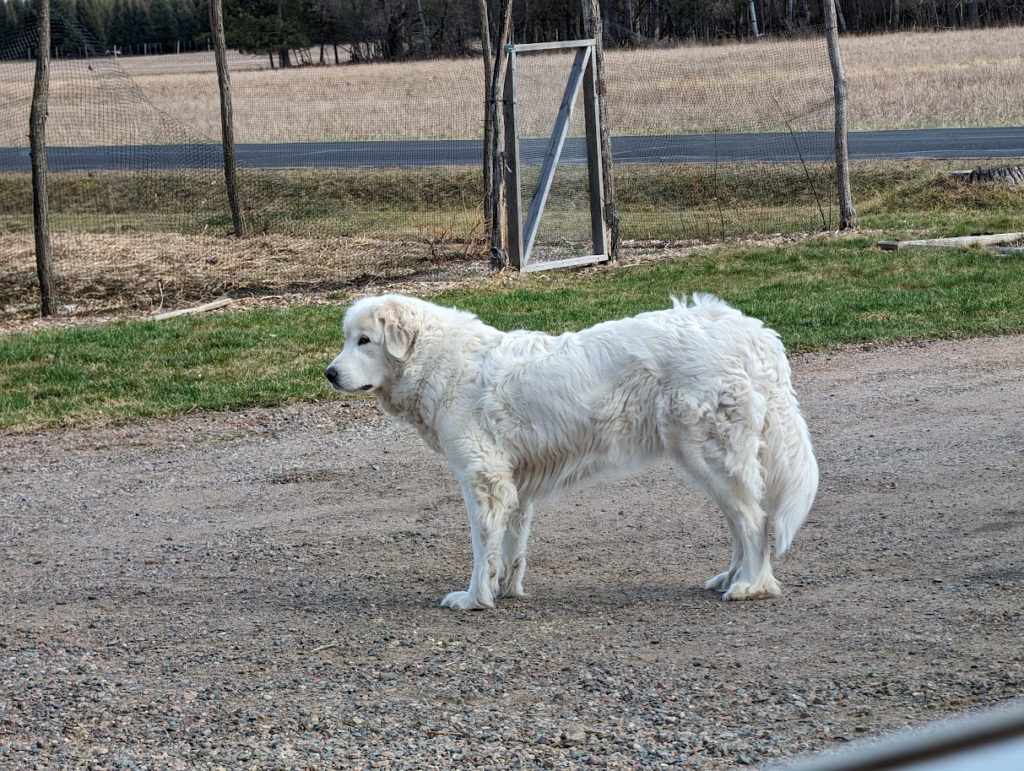
That hawk alarm is usually the cue for our Great Pyrenees to spring into action. She’ll jump up, tell that hawk exactly whose yard this is, and once the threat is gone, she goes right back to her favorite hobby: sleeping in the house. She might be a spoiled pup and not a “textbook” livestock guardian, but she knows how to tell birds who’s boss.
Bio-Security at Scale
With a big flock, you have to be careful about what you bring onto the property.
New Additions: If we buy new birds (instead of hatching our own), they get quarantined away from the main 8×8 shed for a week.
Foot Traffic: Since we have a farm stand and visitors for “Meet the Goats,” I try to keep the chicken “free range” area somewhat separate from where high-traffic guests walk to prevent any cross-contamination. It’s not the easiest thing in the world, typically chickens go wherever they want so we try to wait until late morning to let them out to free range, this also helps us with eggs, all the eggs are in one spot and we don’t find as many secret stashes of eggs on the property.
Is bigger better? Should you get more chickens
I always say that more chickens are better, they’re such a low maintenance addition to your farm. They’re easier to take care of than our herd of goats, we just make sure they have food and water when we’re doing goat chores and clean the coop as needed.
Leave a Reply
You must be logged in to post a comment.